Why we need to get serious about aftercare
Does waxing aftercare actually work? Waxing salon owner Tracey Park tested seven brands on eight clients to find out
I could not see clear skin. That is the first thing I wrote in my notes when Client S lay on my couch back in March. Her entire bikini area was covered in ingrown hairs, raised bumps and dark scarring from years of inflammation.
She had been going to a different salon. Nobody there had told her what to do between appointments. Nobody had given her a single product. 10 weeks later, after following a simple twice-daily routine, her skin was almost completely clear.
That is not an exaggeration. I photographed every appointment. I have the evidence.
And she was not the only one. I ran this study across eight clients and seven aftercare brands over 10 weeks at my clinic in Milton Keynes. Every single product range that I tested produced visible improvement for the clients. Not one of them failed.
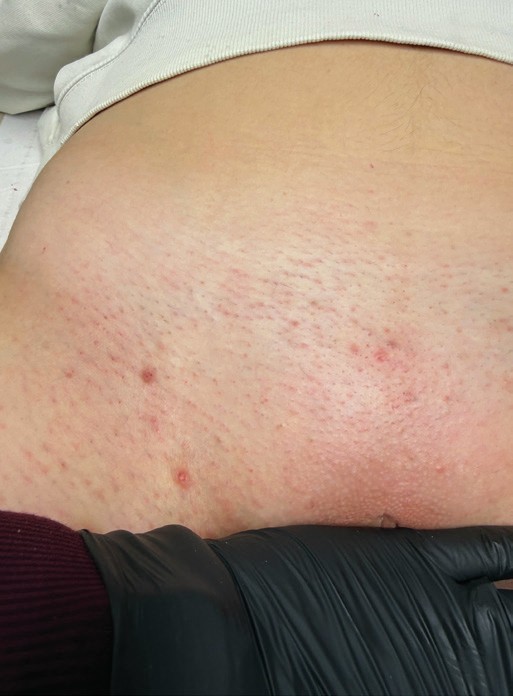
CLIENT'S BASELINE VS 10-WEEK RESULT
Why I did this
I have been waxing for over 24 years and the same thing has frustrated me for most of them. We tell clients aftercare matters. They nod. They take the leaflet. They walk out the door and do nothing. Part of that is on them. But part of it is on us, because we haven’t shown them the evidence to back it up. We just say it works.
I wanted actual proof – photos, timelines, client feedback in their own words – something I could show a client and say look, this is what happens when you use the products and this is what happens when you do not.
The study
I approached several aftercare brands and asked them to donate products for the trial. Seven said yes. Others either declined or did not get back to me. The brands that took part were Nkd Products, Ashmira Botanica, Harley Waxing, Gigi, Clean & Easy, Perron Rigot and Italwax. I am grateful to every one of them for getting behind it.
I already stock Bump Eraiser and Ruff Stuff Body Scrub in my salon. My clients purchase them and I hear first-hand that they work.
I would not stock anything I did not believe in. But I deliberately left them out because I did not want the findings to look biased towards the products I sell, and I wanted to see what else was out there. Not every product suits every client.
The eight clients ranged from mild post-wax bumps to the most severe ingrown hair presentation I have seen in 24 years. One client has diabetes. One was brand new to waxing. One had switched salons and her skin had fallen apart.
What I found
Every product range worked when the client used it consistently. That was the single clearest finding. The brand used mattered less than whether the client actually stuck with it.
One client preferred a roll-on over a spray because she liked how it felt to apply. Another preferred a spray because it fitted into her morning routine without any fuss. One found a peeling powder too drying at first but her skin adjusted within a week. The client with diabetes saw fewer aggressive ingrown hairs than she usually gets, but her skin did dry out from one of the serums, so we adapted.
None of that is about one product being better than another. It is about finding what your client will actually use. The most expensive product in the world does nothing if it sits in a bathroom cabinet.
What this means for therapists
If you are not talking to your clients about aftercare, they are dealing with ingrown hairs on their own. They will blame the wax. They will blame you. And some of them will not come back.
It doesn’t take long – 30 seconds at the end of the appointment. Tell them what to use and how often. Tell them to wait 48 hours before they start. You are not upselling, you’re completing the service. The wax is only half the treatment; aftercare is the other half.
The full report
The complete study runs to over 40 pages with clinical photography for every client at every stage, a full ingredient analysis across all seven ranges, verbatim client feedback and the skin science behind why aftercare matters. It also covers a breakdown of friction, the 48-hour recovery window, and a practical business case for why every salon should be having this conversation.
TRACEY PARK
Tracey Park is the owner of The Waxing Studio Milton Keynes, specialising in intimate waxing and advanced ingrown hair treatment. She has over 24 years of industry experience. Find her on Instagram @thewaxingstudiomk
“If you are not talking to your clients about aftercare, they are dealing with ingrown hairs on their own. They will blame the wax. They will blame you. And some of them will not come back”
To read the full report, scan the QR code or visit professionalbeauty.co.uk/waxingstudy