Ward’s world
Budget BEDLAM
Some of the measures announced in the Autumn Budget will present challenges for beauty businesses in the year ahead. Hellen Ward outlines the changes needed for the sector
As I write, we are almost two weeks post Autumn Budget announcement and I am in a position to share not just my own concerns, but those of the many salon owners who are part of Salon Employers Association (SEA). Our WhatsApp group is a forum for debate and honesty and, collectively, we are troubled about just how damaging this Budget is going to be for us as a sector.
I’m no economist but I can safely say that it feels like the Chancellor has, as one colleague puts it, figuratively got her hands down the back of the sofa searching for the loose change. I’m baffled as to why the steer is always to fish out of the same pond by incessantly targeting SMEs (small and medium size enterprises) when the gig economy remains largely untouched.
The big offshore companies that make a killing in the UK simply have to start paying their share because making it more expensive to employ people is never going to lead to growth – let alone chucking another bucket load of red tape at the poor employers who are already trying hard to stay afloat. Constantly passing the buck may be easy if the Government are trying to save resources, but is it right?
What needs to change?
As SEA, we will never stop campaigning for VAT reform. We’ve long argued that the Irish model of a split rate (lower for services than retail) is essential for any sector that makes money through staff labour and cannot reclaim input VAT at the same levels as other businesses on the high street. We always speak for our members and raise their legitimate concerns.
We represent not just hairdressing salon owners but beauty too. I can safely say the vast majority of people with the salon keys in their hands are reeling. Like me, they are not experts in accounting and finance, employment law and any of the other areas which increasingly are becoming the remit of the employer. Dishing out the responsibility and landing at the feet of the overstretched owner isn’t a solution.
Most salon owners entered the sector like me, through completing an apprenticeship/ college training, working in a salon, running a column, progressing to management and then eventually either taking over an existing salon or starting their own brand. I did just that 33 years ago, but I often wonder whether this would even be a possibility I would consider if I was faced with making that choice in the current climate. Becoming an employer is an increasingly terrifying prospect unless you have the required skill sets that now seem like a prerequisite.
When we started our salon things were very different. I know times change and I’m never scared to embrace the new, but there must be a level of competence in government to ensure the money-saving, budget-busting ideas to save money are fiscally practicable.
Simply making things the employer’s issue is only going to lead to fewer people wanting to take that gamble, which is not good for the future of our industry. The Employment Rights Bill is indisputably shifting more responsibility to the employer – another legislative burden that is going to be costly to enforce and time consuming to ensure compliance.
The next generation
Running a PAYE business and employing apprentices is becoming prohibitively expensive. Raising the National Minimum Wage (NMW) again will only have a further detrimental effect on the number of apprenticeships available in salons. In our business, we have no age cap on our training programme and it would be sad to have to rethink this policy as many of our senior leadership team have started with us in later years and gone on to accomplish huge things in their careers.
Salons that don’t operate a PAYE scheme cannot employ apprentices, which is why we have never wavered from our message. The compliance and enforcement to stop people operating businesses that should be PAYE-classified as disguised employment models is key. Failure to give clear guidelines only creates a greater disparity and limits apprenticeship opportunities.
SEA will always champion the freelancers as a career choice, but we will never endorse disguised employment. Levelling the playing field is the only way to ensure everyone can legitimately run hair and beauty salons in the way that suits them.
Rising rates
Adding to the worrying burden of increase in NMW (at a time when we are still coming to terms with the rises in National Insurance Contributions from the previous budget) perhaps most concerning for the future is the increase in business rates.
From April 2026, rates will rise and, for us, will go back to pre-Covid levels, even though wage costs, suppliers’ costs and the change in consumer behaviour have decimated our profit levels. We have two stark choices – absorb the costs or raise prices and pass them on to the consumer (risking losing their custom).
So, sorry to start 2026 on a less-than-cheery note, but I do wish the correct message was getting through to the right people. While some areas of the “beauty industry” in its widest sense may be in growth – and of course, this is what the Government wants to hear – many people running employed salons are at best treading water and at worst considering throwing in the towel. How can that be good for the Great British high street? Or the young people wishing to learn their craft on our salon floors?
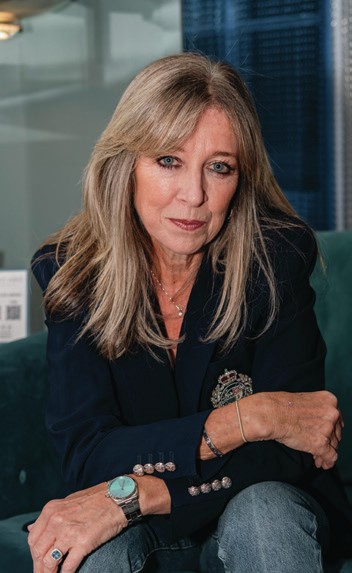
Hellen Ward is managing director of Richard Ward Hair & Metrospa in London, vice president of The Hair & Beauty Charity and co-founder of Salon Employers Association (SEA).