Promotional feature
When SUMMER leaves its mark
As holiday tans fade and pigmentation becomes more visible, practitioners can look beyond the obvious concern and build a more considered approach to post-summer skin
The return from summer holidays brings a familiar shift in the treatment room. Clients settle back into their routines, attention turns back to their skin, and concerns that seemed less noticeable during the warmer months begin to come into focus. Pigmentation is often high on that list.
Existing sun spots may appear darker, freckles more pronounced, and areas of uneven tone become clearer as a tan fades. The effects are not limited to the face. Hands, necks and décolletages are regularly exposed to UV yet often receive less consistent protection and professional skincare attention.
For practitioners, this creates an obvious seasonal opportunity. Yet the more interesting conversation is not how to treat pigmentation, it is how post-summer skin should be assessed, prepared and managed as a whole.
Look beyond the pigment
Pigmentation is complex, and the starting point should always be correct assessment.
Before introducing light-based technology, practitioners need to consider the characteristics of the pigmentation,
Fitzpatrick skin type, recent sun exposure or tanning, medication and treatment history, contraindications and individual skin response. Not every brown mark is appropriate for aesthetic treatment, and some presentations may require referral.
There is also value in looking beyond the concern that initially brought the client through the door. Months of increased UV exposure, heat, travel and disrupted skincare routines can leave the skin presenting with a combination of concerns. Dehydration, congestion, rough texture and reduced clarity can all sit alongside visible pigmentation.
The post-holiday consultation therefore offers an opportunity to move away from treating an isolated imperfection and towards creating a considered skin programme.
Prepare before you target
As combination treatments become more sophisticated, skin preparation plays a more important role.
Preparation should not simply mean adding another step to a protocol. It should have a purpose: improving surface condition, addressing accumulated build-up and creating an appropriate foundation for the treatments that follow.
One technology being incorporated into this approach is Zemits HydroDiamond, a professional resurfacing method combining controlled diamond exfoliation, serum application and vacuum action.
Unlike conventional hydrodermabrasion approaches, the HydroDiamond method applies professional serum directly to the skin before exfoliation. This increases skin contact while allowing the practitioner to control diamond resurfacing and vacuum intensity. For post-summer treatments, it can be paired with Zemits HydroClear Brightening Hydro-Peeling Serum, creating a resurfacing step focused on clarity, texture and a more even-looking complexion.
HydroClear combines niacinamide, glycolic acid, lactic acid and liquorice root extract. Glycolic and lactic acids support controlled exfoliation and surface renewal, while niacinamide is widely used to support barrier function and improve the appearance of uneven tone. Liquorice root extract is also frequently incorporated into skincare formulations targeting brightness and visible discolouration.
The objective is not to position resurfacing as the answer to every pigmentation concern. Its role is more considered: to prepare and condition the skin as part of a wider treatment strategy.
Targeted technology
For suitable visible pigmentation, Zemits Light Expert Pro provides the targeted stage of the programme.
The professional platform combines intense pulsed light (IPL) and dynamic pulsed light (DPL) technologies, allowing practitioners to select treatments according to individual skin characteristics and concerns.
Correct client selection remains fundamental. Patch testing should be carried out where required, with parameters selected according to skin type, response and professional treatment protocols.
This distinction is important as clients may arrive asking for “pigmentation removal”, but professional practice requires a more nuanced conversation about what can be treated, how it should be approached and what constitutes a realistic result. Clients are not simply paying for access to technology, they are investing in the practitioner's ability to understand their skin and construct an appropriate treatment pathway.
Proof in practice
A recent case from aesthetic practitioner Monika Hofmann, owner of Monika Hofmann Aesthetic in Coulsdon, demonstrates how preparation and targeted technology can work within the same strategy.
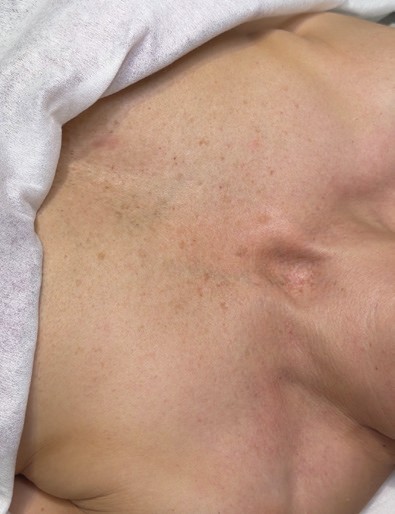
The 49-year-old client, with normal skin and Fitzpatrick Skin Type III, presented with long-standing visible brown pigmentation across the décolletage.
After consultation and patch testing, HydroDiamond was used to prepare the skin before one pigmentation treatment with Zemits Light Expert Pro. Parameters were selected based on the client's Fitzpatrick type, individual skin response, and the Zemits treatment protocol.
Before

After
The after photograph was taken three weeks later, once the skin had fully healed. At this point, Hofmann recorded an approximately 80% visible improvement in pigmentation, with a significant reduction in the appearance of the long-standing brown spots and a noticeably more even-looking décolletage.
Individual results naturally vary, but this case shows the potential of combining appropriate assessment, preparation, and targeted technology rather than viewing each modality in isolation.
From appointment to programme
Perhaps the greatest opportunity presented by the post-holiday return is the chance to change the structure of the client conversation.
A client may initially book because of one sun spot. A professional consultation may reveal a wider combination of pigmentation, dehydration, texture changes, congestion or other visible signs of photoageing.
The resulting treatment journey can extend from consultation and preparation through targeted treatment, professional skincare, review and longer-term maintenance.
It also creates a natural opportunity to reinforce one of the most important messages around pigmentation: sun protection does not end when the holiday does. Consistent SPF remains relevant year-round, particularly when professional treatments form part of a pigmentation management plan.
For businesses, this programme-led approach can encourage continuity without relying on discounting or unnecessary treatment frequency. For clients, it offers something more meaningful: a treatment plan built around their skin, not an appointment built around a machine.
The summer holiday may be over, but for many clients, its effects on the skin are only now becoming fully visible.
To learn more about incorporating HydroDiamond and Light Expert Pro into your post-summer treatment menu, call the Zemits UK team on 020 4532 5922, scan the QR code or visit zemits.co.uk