Brows
To the RESCUE
From overprocessed hair and uneven shapes to botched semi-permanent makeup, Fiona Vlemmiks asks the brow experts how to assess damage, plan corrections and turn brow rescue into a specialism
The rise of social media-driven brow trends, from lamination to bleaching, has fuelled demand for ever more dramatic looks. As clients bounce between DIY attempts and salon treatments in a bid to recreate these effects, we’re seeing an increase in overprocessed, over-tinted and chemically damaged brows arriving in salons and brow bars.
For professionals, this presents a potentially lucrative opportunity to position themselves as specialists in brow correction – helping to command premium prices, build client trust, and encourage long-term loyalty.
We asked some of the industry’s leading voices to outline the protocols needed to assess brow damage, restore brow health, and turn brow correction into a profitable specialist service.
Issue:
The Compromised Canvas
The expert:
Laura Wilson, training manager, at Apraise Professional Lash and Brow Tinting
The Diagnosis: “Overprocessing during the brow lamination or tinting process can compromise the hair's condition, causing dryness, brittleness and breakage. Overprocessed brows can appear frizzy, kinked and dry with increased porosity.
“Carry out a visual inspection and test the brows to see how they behave. Gently brush brows in their natural growth direction, then upwards. Naturally coarse hairs may resist movement but will retain their integrity, whereas damaged hairs may appear frizzy, tangled or be prone to breaking.”
The Client Conversation: “Be honest but reassuring when discussing signs of overprocessing and chemical damage with a client. Explain your observations without placing blame on them or their previous brow artist.
“Focus on the health of their brows and steps they can take to support healthy regrowth. Set realistic expectations when explaining how their brows may look until regrowth has happened, and when discussing the recovery time.”
The Immediate Fix: “If you suspect overprocessing, stop the treatment immediately and gently remove any remaining product according to the manufacturer’s instructions. Assess the hair’s condition and apply a suitable conditioning or nourishing product.
“Avoid waxing during the appointment, particularly if the skin is red, irritated or sensitised. Postpone further chemical treatments, including brow lamination and tinting, until the compromised hairs have grown out and healthy hair condition is restored. Reassess after six-to-eight weeks but only resume chemical treatments if the hair is in suitable condition.”
The Retail Plan: “At-home maintenance won’t reverse chemical damage. However, it is key for brows to recover. Recommend nourishing brow oils, such as Apraise Nourishing Brow Oil, to condition dry, brittle hairs, improve manageability and minimise breakage. Pair with a serum to nourish and strengthen the appearance of weak, sparse, brows while supporting the natural growth cycle. Avoid applying products to irritated or broken skin.”
Issue:
The Wonky Brow
The expert:
Rosie Kefford, salon owner, educator, official HD Brows Stylist & Level 4 KB Pro Semi-Permanent Brow Artist
The Diagnosis: “I always map with my client sitting upright, using mapping string and a calliper to outline the shape, but I never rely on measurements alone. Faces are rarely perfectly symmetrical, so I step back and assess what looks balanced and natural for the individual.
“I also observe the client's natural muscle movement, as one brow may sit higher or lift more than the other. Following Botox, I advise waiting at least two weeks for the results to settle before assessing the brow position.”
The Immediate Fix: “If the difference is down to mapping, you can adjust the proposed shape before treatment to create a more balanced result. However, if muscle movement or recent Botox is affecting the brow position, I wouldn't simply force the brows into symmetry. I’d assess whether it's appropriate to proceed or whether the client needs to return once their brow position has stabilised.”
The Retail Plan: “Following any brow treatment, I recommend a simple aftercare routine that supports skin healing and protects the results.
“I'd avoid introducing unnecessary products or active ingredients to the area while it’s healing and always advise clients to follow the specific aftercare guidance provided for their treatment. It's important to remember that aftercare supports healing, but it won't correct asymmetry caused by muscle movement or facial structure.”
The Client Conversation: “Approach these conversations sensitively and focus on what you can achieve moving forward, rather than being tempted to criticise another technician’s work.
“Explain that brows are naturally asymmetrical and that muscle movement, facial structure and previous treatments can all influence the end result. It’s important to manage your client’s expectations from the outset and explain what can realistically be achieved, rather than promising perfect symmetry.”
Issue:
The SPMU Botch
The expert:
Nez Hasan – celebrity medical & cosmetic semi-permanent makeup artist, trainer, founder of Nez Hasan and creator of
Hairgredients
The Diagnosis: “Faded or botched microblading happens when pigments shift (turning grey, blue, salmon, or red) or when strokes blur due to poor depth or improper skin healing. Although this can happen immediately, all microblading eventually merges and turns grey over time with repeated touch-ups.
“Botched microblading mainly occurs when the technician goes outside the shape of the natural brows and/or creates a very unflattering deep colour. You can Identify the issue by assessing the pigment colour and the skin's texture.
“Check if the ink is placed too deep (if there is a bluish-deep grey shadow) or if there is underlying scar tissue. You must also determine if the shape can be corrected with pigment or if it requires complete removal with laser first to proceed to a cleaner top up.”
The Client Conversation: “Focus on education and avoid commenting on the previous artist. Say something like: ‘The pigment has shifted in the skin over time, which is quite common, but we can work together on a correction plan’. Focusing on expectations is important.”
The Immediate Fix: “Some technicians use warm-toned modifiers or complementary correctors, such as orange or yellow, to neutralise ash or blue tones before applying a new brow shade. Switch from hair-strokes to a soft powder or ombre shading technique to mask old, blurred work. “Avoid fresh microblading over heavily saturated or scarred skin and postpone treatment if the skin is inflamed. I prefer pigment removal and starting again. In my experience, adding warmth can lead to permanent red, pink or orange tones if the pigment is removed later. I prefer ashy tones, as they are easier to remove later on.”
The Retail Plan: “Recommend strict daily sun protection to stop further pigment shifting, as UV rays degrade ink colours.”
Pricing the rescue
Brow correction can demand more time, expertise and follow-up than a regular appointment. From consultation to the bespoke treatment plan, a clear pricing structure helps cover costs, manage client expectations, and position correction as a specialist service rather than a quick fix.
Havva Aykac, permanent makeup artist and founder of Luxe Studio Cosmetics in Kent, says: “Brow correction requires more than routine maintenance. It can involve additional consultation time, a detailed assessment, tailored aftercare and multiple appointments before the client is ready to return to their usual brow treatments.
“I believe pricing should reflect the time, expertise and responsibility involved. A dedicated correction consultation fee, or a clearly priced bespoke service, can work well, with any treatment costs explained upfront. This also creates an opportunity to build trust and long-term client relationships rather than treating correction as a quick add-on to a standard appointment.”
Issue:
The Fried Brow
The expert:
Georgina Dalton, co-founder and head of product and education at Buff Browz
The Diagnosis: “Naturally coarse brow hair tends to be thicker, stronger and more resistant to movement, whereas chemically damaged hair often loses its elasticity, strength and structural integrity.
“One of the biggest indicators is how the hair responds when gently manipulated. Healthy coarse hair generally maintains its strength, whereas over-processed hair may appear kinked, lose its shape or even break. Understanding the difference is essential before considering any further chemical treatment.”
The Client Conversation: “I think it's incredibly important to approach these conversations with professionalism and empathy. We don't always know the circumstances surrounding a previous treatment, so placing blame on another technician isn't constructive.
“Instead, I would explain what I'm observing in the hair, and what we can realistically do to support recovery. Clients appreciate honesty, particularly when you're prioritising their long-term brow health over performing another treatment.”
The Immediate Fix: “The most important thing is knowing when not to treat. If the hair is showing signs of significant chemical damage, I would always advise against further lamination, tinting or other potentially compromising chemical services. Instead, focus on conditioning treatments that help improve manageability and protect the hair while it grows out.
“Unfortunately, once the internal structure of the hair has been significantly compromised, no product can completely reverse that damage. The priority should always be preventing further deterioration rather than attempting an immediate chemical correction.”
The Retail Plan: “I believe effective aftercare should focus on both the hair and the surrounding skin. Lightweight conditioning oils made up of the correct blend can help improve the feel and manageability of damaged brow hair.
“The Buff Browz Renew Oil is an aftercare elixir for both eyebrows and eyelashes which deeply nourishes each hair to strengthen, restore, and promote healthy growth.”
The patch tests and the products
As correction clients often present with a compromised skin barrier, patch-testing should be entirely non-negotiable.
For clients desperate to correct a previous brow treatment, delaying the process for a patch test can feel like an unwelcome setback. Yet taking the time to patch-test before proceeding helps protect both professional and client.
“Safety protocols must never be overlooked, regardless of how many times a client says they have had the treatment before without a reaction,” says Aykac. “Sensitivity can develop over time, and a previous uneventful appointment does not guarantee that the next treatment will be safe. Patch-testing must always follow the manufacturer's instructions, professional guidance and the requirements of the relevant insurer.”
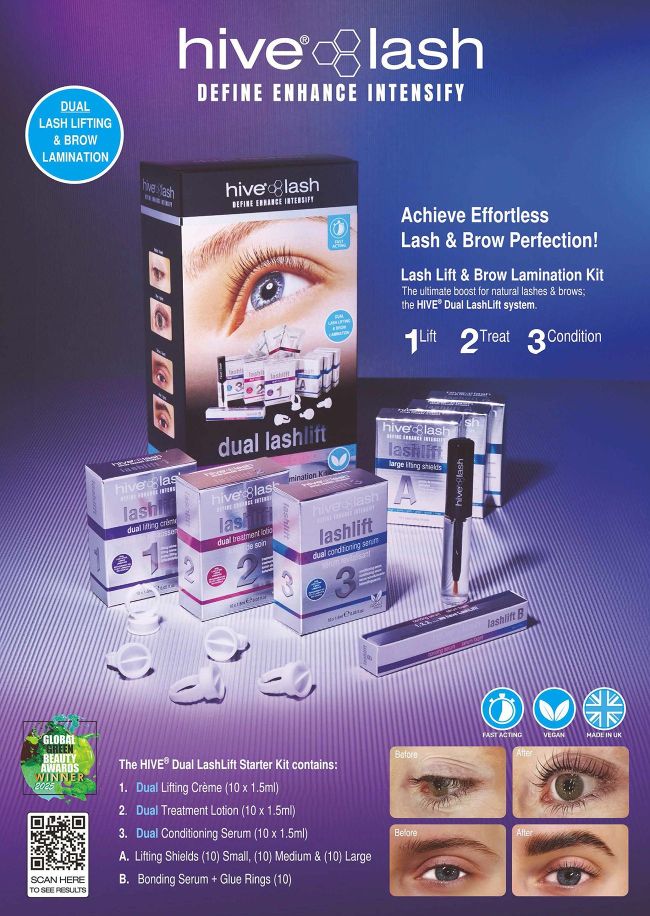
The right products, alongside professional expertise, are essential to achieving the best results for your clients. For brow lamination, the newly repackaged Hive Dual LashLift Starter Kit features quality vegan formulations and contains all the essentials needed to perform safe treatments. As a bonus, the kit also contains the tools needed to perform lash-lifting treatments.