Interview
Talking to… Vanita Parti
The Blink Brow Bar founder tells Ellen Cummings how she turned an overlooked beauty ritual into a category-defining brand and what it really takes to build a business that lasts
Vanita Parti has spent much of her career seeing potential where other people saw something too niche or too unfamiliar.
Long before professional brow services became a staple of the British beauty industry, Parti recognised that threading – an ancient technique embedded in South Asian beauty culture – could become a premium, mainstream service. In 2004, she launched Blink Brow Bar with one chair and one therapist in London department store Fenwick. More than two decades later, the business has helped transform the way British consumers think about brows.
Her instinct for spotting an idea before the market catches up goes back much further. As a student, she tried selling what she describes as “very lavish sandwiches” in Birmingham city centre, only to find customers were not quite ready to swap cheese and pickle for brie and rocket. Later, she explored launching an online dating platform for the South Asian community but recognised she couldn't see a clear route to bringing the technology to life.
“I think I was always scheming in my head,” she says. “It wasn’t about making money; it was about being creative. That’s what really excited me.”
That entrepreneurial instinct was shaped by her upbringing. Parti grew up in an open-minded household with two sisters, her mother, and a father who ran his own fashion business after moving to London from India.
“Every day was different and risk was normalised,” she says. “It was feast and famine in our house. I could tell when my dad had had a good few months and we’d go on a lovely holiday, and then when things were a bit tight, I could tell my mum was tightening the belt. It was a bit chaotic in our house but it was always exciting.”
As a result, the prospect of leaving a stable corporate career didn't frighten her. “Why would you carry on doing the same job or working up a corporate ladder when you could go and do your own thing and make your own chaos and be creative?” she says. “For me, it just felt really normal.”
Finding the right idea
Before entering beauty, Parti worked across travel, publishing and brand management, including roles at Trailfinders, Bloomsbury Publishing and British Airways – all experiences that taught her how strong brands are built and sustained.
After becoming pregnant, Parti returned to a three-day-a-week role at British Airways, but wanted more creative freedom and greater control over her time.
The business idea eventually came from a personal frustration. Parti regularly travelled to Wembley to have her brows threaded and could not understand why the service was so hard to find in central London. She began spending time shadowing therapists and learning what distinguished good threading from bad.
Seeing what others couldn't
“It was crazy that London was at the forefront of everything to do with fashion and beauty, but threading was something they just weren’t doing,” she says. “I thought it would be so exciting to take it from a very unappreciated skill and really celebrate it.”
The cultural timing also felt right. Indian food, fashion, design and entertainment were becoming increasingly visible in British culture, while beauty consumers were becoming more comfortable with quick, public-facing services such as nail bars.
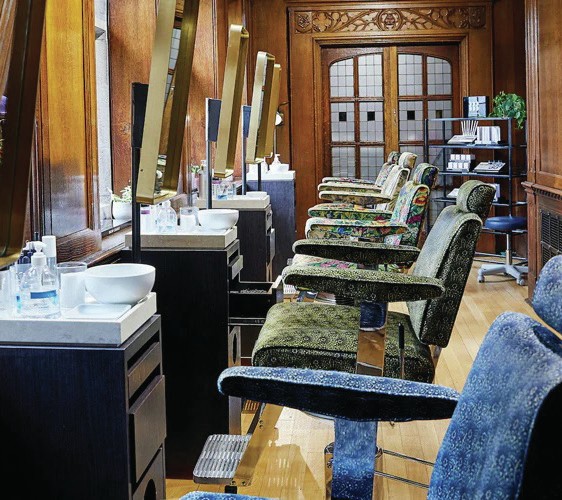
Parti did not want to hide threading away in a treatment room. Inspired by Mac makeup counters, sushi bars and nail bars, she envisaged a row of chairs where busy women could stop, have their brows shaped and continue with their day. Rather than a conventional salon, she wanted Blink to feel like a beauty brand.
Selfridges was her dream launch partner, but the store turned her down because it did not have space. Harvey Nichols also passed, believing threading wouldn’t appeal to the majority of its customers.
Then Parti’s sister suggested Fenwick, a smaller department store close to the former offices of magazine publisher Condé Nast. Parti dropped off a physical proposal at Fenwick’s reception, outlining the concept, its visual identity and the revenue she believed one chair could generate. The buyer called and invited her in.
“She said, ‘I love it because we’ve got all the Vogue girls next door. They’ll come in because it’s on their doorstep, and once they love it, it will go viral’,” Parti recalls.
Fenwick also encouraged her to charge £15 rather than the £10 she had proposed, reinforcing the premium positioning she wanted to create.
One chair, one therapist
The opening day, however, was far from an instant success. “It was hideous,” Parti says. “It was zero pounds.”
She and her sole therapist stood beside the empty chair as shoppers passed without understanding what threading was or why they should try it. Parti handed out booklets explaining its history and tried to persuade people to sit down and have a treatment.
Then she realised visibility would be the key. She invited department store staff to have complimentary treatments so shoppers could watch and see the results. Within three months, the chair was fully booked.
Parti also hand-delivered 50 invitations to journalists. Some articles celebrated threading as the perfect lunchtime beauty fix; others joked about whether bikini waxing by the deli counter would be next. Either way, people were talking.
Soon, Fenwick wanted another chair, while Selfridges and Harvey Nichols returned with offers of their own. But success brought a different challenge: how to scale while maintaining quality. At the time, Parti had two young children and was involved in every aspect of the operation.
“When I look back, I remember I lost an awful lot of weight. I had terrible skin. It’s all a bit of a haze,” she recalls. “There is no balance. You make a choice. You’ve got to live and breathe your business, and if you don’t care for it as you would a child, then it will collapse.”
Building a brand, not just a business
From the beginning, branding was about far more than a logo. Parti replaced an “awful black dentist chair” with a cream-upholstered barber chair and commissioned elegant typography and uniforms from India.
The brand promise was distilled into one sentence: to shape eyebrows in 15 minutes, by experts, leaving clients feeling fabulous and therefore confident. “For me, it’s all about confidence,” she says. “Beauty is not frivolous. It is about making women feel good about themselves.”
Today, Blink employs around 150 therapists, making training and standardisation critical. Each 15-minute service is structured around consultation, brow mapping, shaping and a 60-second massage. “Customers should get the same thing wherever they go,” she says. “That’s a good brand.”
The power of staying focused
As it grew, Blink experimented with waxing, nails and massage after department stores asked the business to broaden its offer, but Parti eventually realised that diversification was weakening the concept.
“It meant more training, different beauty licences, and I had to buy a whole set of nail varnishes that kept changing with the trends,” she says. “I realised, ‘What am I doing?’. It was hard to say no, but you have to because otherwise you are compromising your core brand. Just do the thing you do best.”
Blink now focuses on brows, lashes and products for the eye area, while looking for inspiration from global beauty movements, wellness trends and innovations such as Korean lash lifts.
More than 20 years after launch, Parti can see the scale of the cultural change Blink helped create. Brow products were once limited and many women over-tweezed without understanding how shape could alter the face. Now, younger clients often visit Blink with their mothers before they begin plucking.
“I do feel Blink was a huge part of that change,” she says. “It’s incredible on reflection, and it’s great that brows have become a basic, fundamental start to anyone’s beauty routine.”
Her MBE for services to the beauty industry and charity work in 2015 made that impact feel tangible. Parti took her father to Buckingham Palace – an experience she describes as one of the most moving moments of her life.
“We, as a team, had made a difference to British beauty,” she says.
Still looking ahead
The next chapter is focused on international growth and products. Blink has launched products with Sephora in the Middle East, is expanding into Germany and Austria, and is exploring opportunities in Mexico and China.
Parti says that were she launching in 2026, she would build digital into the business much earlier. She admires brands that have scaled rapidly through TikTok and ecommerce, but believes Blink’s slower, organic growth gave it the foundations to survive challenges.
She would also choose department stores again. The open setting allowed customers to watch treatments, see the results and become curious, which can be hard to recreate online.
For beauty professionals sitting on an idea of their own, Parti’s advice is not to wait for the perfect opportunity. “We’ve all got ideas,” she says. “But it’s actually making them happen. If you really believe in an idea and it’s sitting in your gut, find a way to make it happen.
“I started with a chair and one girl. Just get out there and don’t wait for it to be perfect.”
Key dates
2004 Vanita Parti launches first Blink Brow Bar chair at Fenwick on London's Bond Street.
2005 Launches BBB London's first brow pencil, marking the brand's expansion from professional services into retail products.
2008 Wins the CEW New Achiever Award, recognising Blink Brow Bar's impact on the beauty industry.
2011 Takes Blink Brow Bar international with the launch of its first US location at Henri Bendel in New York.
2014 Opens first standalone Blink Brow Bar boutique in London's Notting Hill, expanding beyond department stores.
2015 Awarded an MBE for services to the beauty industry, recognising her contribution to transforming brow beauty in the UK.
2024 Expands the brand's international retail presence with the launch of BBB London products in Sephora UAE.
2026 Blink Brow Bar now operates in boutiques and department stores in London, Manchester and Malta, while continuing its international expansion.