Wellness
Tech-enhanced treatments
Touchless wellness is on the rise as spas turn to technology to enhance relaxation while easing therapist workload. Ellen Cummings gets the lowdown
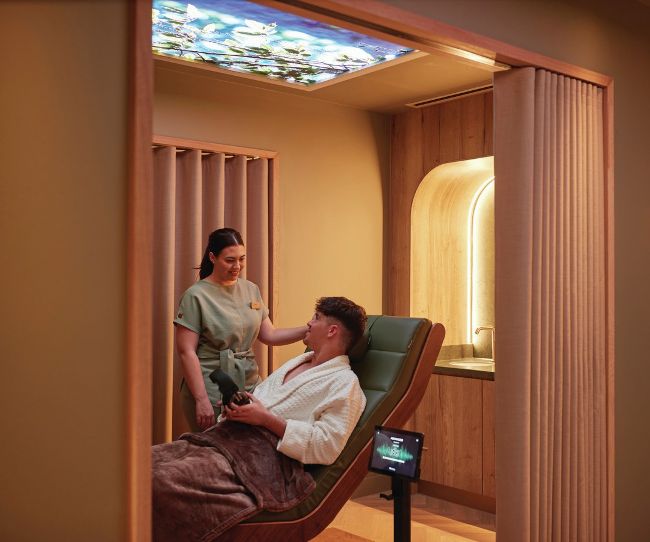
IMAGE CREDIT: AQUA SANA FOREST SPA
As spas evolve to meet changing guest expectations, a growing number are turning to “touchless” and therapist-light wellness experiences – treatments that use sound, vibration, heat, light and recovery technology to deliver wellbeing benefits with minimal hands-on intervention. But despite the terminology, industry leaders are clear on one thing: this is not about replacing therapists.
Instead, these experiences are being used to support therapist wellbeing, create more flexible treatment journeys and give guests greater autonomy over how they relax and recover. From immersive sound therapy pods to vibro-acoustic loungers, infrared saunas and compression therapy systems, spas are increasingly blending technology with traditional wellness principles to create experiences that are as operationally smart as they are commercially appealing.
For many operators, the rise of therapist-light wellness has been driven by changing consumer behaviour. Guests are seeking more flexible, personalised experiences that fit around modern lifestyles, and they’re increasingly open to treatments that don’t follow the traditional therapist-client format.
At Aqua Sana Forest Spa, this philosophy has shaped the brand’s multi-sensory spa journeys. Laura Freeman, group spa manager at Aqua Sana Forest Spa, explains, “Our spas are designed as journeys rather than single treatments, allowing guests to move through a series of nature inspired experiences that engage the senses through heat, water, light, sound and scent.”
Rather than relying solely on therapist-led treatments, guests are encouraged to tune into what they need in the moment, moving through the spa while accessing optional wellbeing sessions such as sound bathing, sleep sessions and sauna rituals.
“Guests value the freedom of self-guided experiences, which support deeper relaxation and allow them to disengage from the outside world in a way that feels personal and unforced,” says Freeman.
The approach also reflects a broader industry move towards immersive wellness environments that work through atmosphere and sensory design as much as direct touch.
Technology meets immersion
The next evolution of this trend is increasingly technology-led. Aqua Sana’s new Forest Serenity Suite at Woburn Forest, which launched in May, introduces fully immersive touchless therapy experiences centred around Gharieni Welnamis loungers.
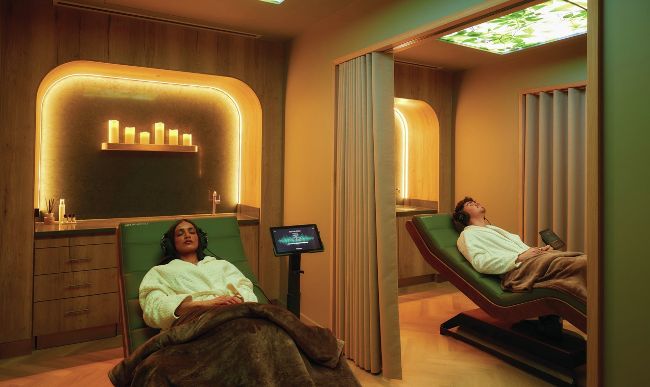
Designed as a dedicated touchless wellbeing sanctuary, the space features six treatment pods offering sound and vibration therapy using binaural beats, therapeutic frequencies and synchronised vibrations transmitted through the treatment bed.
The experience combines neuroscience-backed relaxation technology with forest-inspired sensory immersion, including visuals projected onto the ceiling and bespoke soundscapes created from environmental data gathered within Woburn Forest itself.
Freeman believes these environments demonstrate how technology can enhance wellbeing while remaining largely self-guided. “This immersive sound and vibration offers guests a new way to experience wellbeing,” she says. “It demonstrates how carefully designed environments, and technology can deliver meaningful results while remaining largely self-guided.”
Importantly, operators stress that technology is being used to complement human expertise. “At Aqua Sana Forest Spa, these environments work both independently and alongside traditional hands-on treatments, enhancing their impact rather than replacing them,” Freeman adds.
That balance between technology and therapist expertise is echoed at Sæl Spa, the new longevity-focused wellness destination which opened at Fulham Pier in May.
Recovery becomes the new wellness language
At Sæl Spa, recovery technologies such as compression therapy, red light therapy, PEMF tools and vibro-acoustic loungers are positioned as part of a wider wellness ecosystem focused on longevity, performance and everyday function.
Head of Sæl Spa Michaela Hurst says, “We see wellness as something that should support how you live, perform and recover on a day-to-day basis. It’s not just about relaxation; it’s about giving the body what it needs to function at its best.”
The spa integrates diagnostics, movement and recovery technologies into personalised treatment pathways designed to deliver both immediate and long-term results. “Standalone treatments have their place, but the real impact comes when everything is connected,” says Hurst. “When you layer movement, recovery and diagnostics together, you’re able to create something more personalised and effective rather than a one-off experience.”
Many of these recovery-led treatments require minimal therapist involvement during the session itself. Compression therapy, red light therapy and vibro-acoustic loungers allow guests to experience guided recovery more autonomously while still feeling supported. “It’s not about removing the human connection,” Hurst says. “It’s allowing guests to choose what’s right for them in that moment.”
This results-driven positioning is resonating with increasingly wellness-literate consumers. “There’s a growing awareness around recovery and performance, and guests are much more open to treatments that feel purposeful and results-driven,” she says.
“We’re seeing a real shift towards guests wanting more from their time. People are busy, they’re time poor, and when they carve out space for wellness, they want it to truly count.”
AQUA SANA FOREST SPA
Supporting therapists
While the commercial appeal of therapist-light wellness is clear, operators are keen to avoid any suggestion that technology could replace therapists altogether. Instead, many see these treatments as a way to create more sustainable working models in an industry where physical burnout and therapist retention remain significant challenges.
At Aqua Sana, lower-labour experiences allow therapists to focus on more specialist, high-touch services where skill and human connection matter most. “These experiences help relieve some of the physical intensity associated with hands-on treatments, supporting even workloads and contributing to a working environment that therapists can sustain long term,” Freeman explains.
Similarly, Hurst says recovery technologies create more balance within therapists’ working days. “It reduces reliance on purely manual treatments, keeping a sustainable way of working and easing day to day pressure – we need more modalities to help therapists perform consistently throughout their day because it’s a very hard role to sustain.”
The therapist’s role itself may also evolve as wellness becomes increasingly consultative and personalised. “Definitely,” Hurst says when asked whether technology allows therapists to focus more on consultation and personalisation. “It shifts the role slightly towards being more consultative, which ultimately creates a better experience for the guest.”
Freeman agrees, adding, “The therapist’s role will continue to shift towards delivering highly personalised, specialist treatments, while guiding guests through a more holistic and immersive wellbeing journey.”
A broader market opportunity
The trend is extending beyond destination spas into salon and urban wellness environments too. Gina Conway Salon & Spa in London has introduced wellness pods offering automated massage experiences alongside infrared sauna sessions designed to support relaxation, circulation and recovery.
Founder Gina Conway says the decision to introduce wellness technology was personal, following her own experience of stress, menopause symptoms and chronic pain. “I had to discover through research, trial and error, and finally found some beautiful nervous system and cellular recovery health technology that really made a difference,” she says.
Conway also sees therapist-light wellness as a valuable way to support staff wellbeing in an industry known for physical burnout. “Hairdressing and beauty therapy is physically hard work,” she says. “Our therapists are on their feet all day, using their bodies, and that takes a toll over time. Burnout is something I take really seriously.”
She encourages staff to use the equipment themselves, helping them recover physically while also improving the client experience. The treatments also create opportunities for add-on services and wellness packages.
“It becomes an add-on service either before or after their treatment to upsell and deliver even greater results and satisfaction,” Conway explains. “We're in a fortunate position to be able to offer something that genuinely nourishes them from the inside out.”
The salon is now developing wellness packages that combine touchless wellness experiences with skincare and holistic treatments like reflexology, reflecting a broader shift towards integrated wellbeing. For spas and salons in high-cost urban environments, these treatments present an opportunity to maximise the value of treatment spaces without increasing therapist workload.
But operators insist the future of wellness will depend on maintaining emotional connection alongside innovation. “The next generation of spa treatments will be defined by the full experience, not just the treatment,” says Hurst. “We layer in technology to enhance outcomes, but the foundation is always the therapists' expertise, intuition and connection. That’s where the real value sits.”
As guest expectations evolve, the most successful spas are unlikely to be those choosing between tech and touch, but those finding the right balance between the two.